

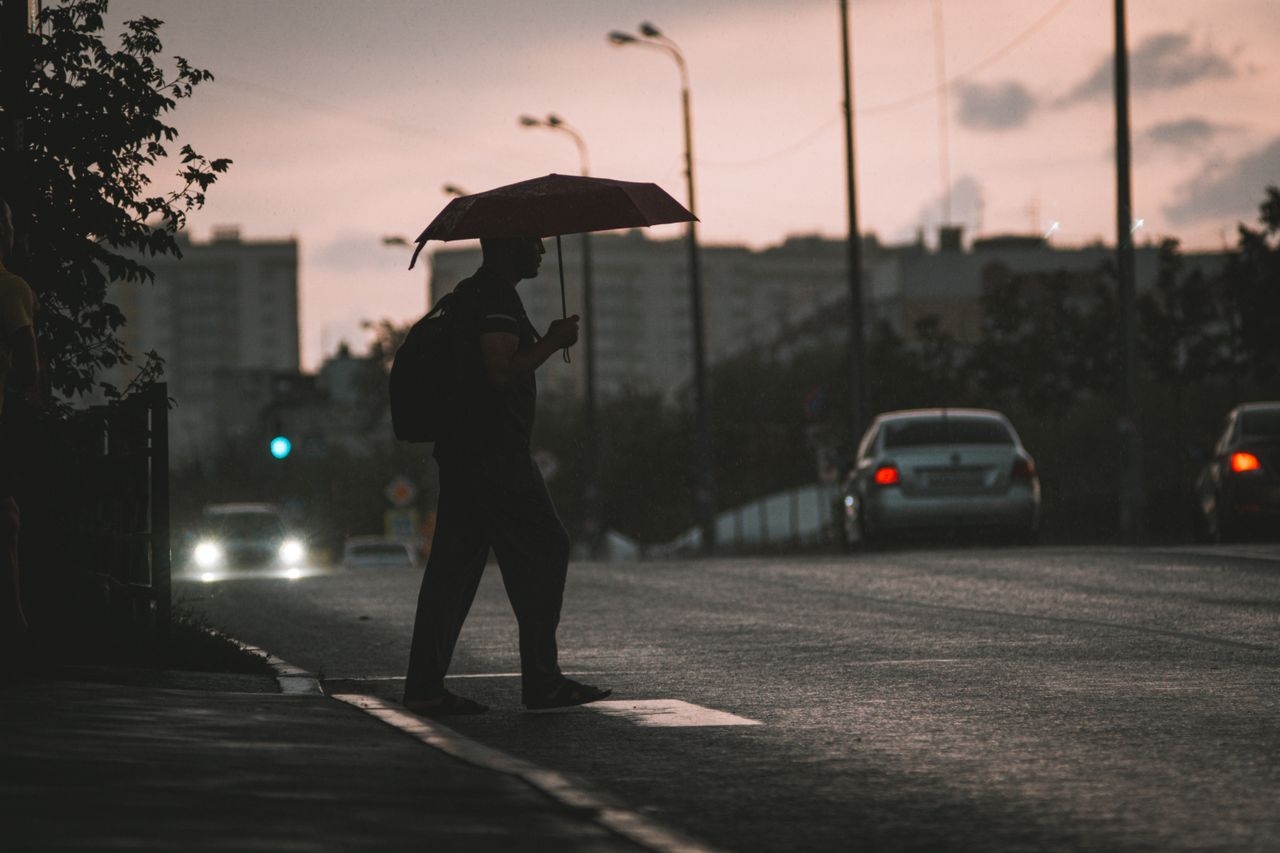
You were walking home from work, crossing a street, or heading toward your car when a driver hit you. It was already dark outside, even though it was only early evening.
Now you're dealing with injuries, medical appointments, and questions about how the accident happened. Maybe the driver claims they couldn't see you. Maybe they're saying you were wearing dark clothing or that you should have waited before crossing.
Does the fact that it was dark mean you're responsible for what happened?
In New Jersey, drivers still have a responsibility to watch for pedestrians and operate their vehicles safely after sunset. Darkness alone does not excuse negligent driving. If you were injured because a driver failed to exercise reasonable care, you may have grounds for a pedestrian accident claim.
Why Do Pedestrian Accidents Increase After Dark in New Jersey?
When daylight saving time ends in November, many New Jersey residents suddenly find themselves commuting home in the dark.
That change creates additional risks for people walking through intersections, crossing busy streets, or heading toward parking areas.
According to an October 2026 report from AAA Northeast, pedestrian crashes in New Jersey during the 5 p.m. to 6 p.m. hour increased by 65% from October to November 2025.
For residents of New Brunswick, Edison, Highland Park, and surrounding Middlesex County communities, these risks can arise along familiar streets during ordinary evening activities.
Reduced visibility makes it harder for drivers to recognize pedestrians. Headlights from oncoming traffic, poorly illuminated intersections, and distractions inside a vehicle can make conditions even more dangerous.
Can a Driver Be at Fault for Hitting a Pedestrian at Night?
Yes. A driver can be held responsible for hitting a pedestrian after dark when negligent driving contributes to the collision.
New Jersey drivers must exercise reasonable care under the circumstances. That includes recognizing when reduced visibility requires greater attention or a lower driving speed.
A driver may be negligent if they:
- Drive too fast for the lighting, traffic, or roadway conditions.
- Fail to watch for pedestrians while approaching an intersection.
- Look at a phone or become distracted behind the wheel.
- Turn without checking whether someone is crossing.
- Fail to use headlights properly or otherwise disregard unsafe driving conditions.
For example, suppose a driver approaches an intersection in New Brunswick at 5:30 p.m. A pedestrian is crossing the street, but the driver is looking toward oncoming traffic while preparing to turn.
If the driver strikes the pedestrian because they failed to check the crosswalk, the fact that it was dark would not automatically excuse their conduct.
The central question is whether the driver acted with reasonable care under the circumstances and whether their actions contributed to the injury.
What If the Driver Says They Couldn't See You?
After a nighttime pedestrian accident, a driver might tell police or an insurance company that the pedestrian appeared suddenly or was impossible to see.
That statement does not, by itself, establish that the driver was free from fault.
A driver who cannot see clearly must account for those conditions when operating a vehicle. Depending on the circumstances, that could mean reducing speed, paying closer attention to the roadway, or taking additional precautions near intersections.
An investigation may examine whether the driver's headlights were working, whether streetlights illuminated the area, and whether the driver had enough time to recognize and respond to someone crossing.
If the driver was distracted, speeding, or failed to observe a pedestrian who was reasonably visible, those facts could support a negligence claim.
Does Wearing Dark Clothing Make You Responsible for the Accident?
Not necessarily.
If you were wearing a black coat, dark pants, or other clothing that made you less noticeable after sunset, the driver's insurance company might argue that your clothing contributed to the collision.
But New Jersey law does not automatically assign fault to pedestrians simply because they were wearing dark clothing.
Responsibility depends on the full circumstances, including where you were walking, the available lighting, the driver's actions, and whether the collision could reasonably have been avoided.
The issue becomes more complicated when both the pedestrian and driver are accused of contributing to the accident.
Under New Jersey's comparative negligence law, an injured pedestrian can still recover compensation if their share of fault is not greater than the fault attributed to the other responsible party or parties combined.
For example, if a pedestrian is found 20% responsible for an accident, their recoverable damages would generally be reduced by 20%. But if their share of fault exceeds 50%, they are generally barred from recovering compensation.
At the Law Offices of Harold J. Gerr, we understand how frustrating it can be when a driver or insurance company tries to shift blame onto an injured pedestrian. Determining responsibility requires looking beyond those accusations and examining what actually happened, including the driver's actions, roadway conditions, and available evidence.
What If You Were Hit Outside a Crosswalk After Dark?
Being struck outside a crosswalk does not automatically mean you have no legal claim, even when the accident happened at night.
Under N.J.S.A. 39:4-36, New Jersey drivers must stop for pedestrians in marked crosswalks under the conditions specified by law and yield to pedestrians at qualifying unmarked intersection crosswalks. Not every legally recognized crosswalk has painted lines.
Pedestrians crossing outside marked or unmarked crosswalks generally must yield the right-of-way to vehicles. But drivers must still exercise reasonable care to avoid collisions.
Suppose you were crossing a street in Edison outside a crosswalk when a speeding driver struck you after sunset. Investigators would need to consider where you entered the roadway, the lighting conditions, and whether the driver had enough time to see you and respond.
Crossing outside a crosswalk can affect how fault is determined, but it does not automatically excuse a driver who failed to operate their vehicle safely.
How Can You Prove a Driver Was Negligent in a Nighttime Pedestrian Accident?
When a driver claims they couldn't see you, evidence can help establish what was visible from behind the wheel and whether the driver had enough time to avoid the collision.
Important evidence can include:
- Surveillance or dashcam footage: Video may show when the pedestrian became visible, how the vehicle approached, and whether the driver reacted before impact.
- Streetlights and nearby lighting: The location and condition of streetlights, illuminated businesses, and other light sources can help establish visibility.
- Vehicle speed and braking: Physical evidence and available vehicle data may help determine whether the driver was traveling too fast for the conditions or attempted to stop.
- Witness statements: People nearby may have observed the pedestrian, the driver's actions, or the lighting conditions at the time.
- Roadway and intersection layout: Crosswalk markings, traffic signals, parked vehicles, and other obstructions may help explain what the driver could see.
Lighting conditions should be evaluated as they existed at the time of the accident. A photograph taken in daylight might not accurately show what a driver could see at 5:30 p.m. in November.
That distinction can be important when an insurance company argues that a pedestrian was difficult to see.
Can You Recover Compensation After Being Hit by a Car at Night?
Yes. If a driver's negligence caused your injuries, you may be entitled to compensation for the losses resulting from the accident. Your right to recover compensation will depend on the evidence, the circumstances of the collision, and whether you share responsibility for what happened.
Depending on the circumstances, recoverable damages can include lost income, pain and suffering, the effects of long-term injuries, and medical expenses not covered by applicable insurance benefits.
Injured While Walking After Dark in Central New Jersey?
After being struck by a vehicle, you may be left dealing with serious injuries while questions about who caused the accident remain unresolved. Getting clear answers about your rights and legal options can help you determine what to do next.
At the Law Offices of Harold J. Gerr, we have more than 40 years of experience representing injured people throughout New Jersey. We take the time to understand how an accident happened, evaluate the circumstances, and help our clients pursue the compensation available under the law.
If you or someone you love was struck by a vehicle after dark in Highland Park, New Brunswick, Edison, or another Central New Jersey community, contact the Law Offices of Harold J. Gerr for a free consultation. We can review what happened, answer your questions, and explain your legal options.
Disclaimer: The articles on this blog are for informational purposes only and are no substitute for legal advice or an attorney-client relationship. If you are seeking legal advice, please contact our law firm directly.